Asset Lifecycle Management Software Development Services
Software that follows each asset from capital plan to commissioning, maintenance and replacement, wired into your ERP, EAM and CMMS.
Our Asset Lifecycle Management Software Development Services
We build the system that tracks every asset from the first budget line to disposal, and connect it to the tools your teams already use.
Asset Lifecycle Management Software Consulting
Software consulting starts with your asset classes, data sources and approval chains, not a feature list. In a 2-week discovery we map where lifecycle data breaks today and return one scope, one price and one timeline before any solutions development starts.
Custom Asset Lifecycle Management Software Development
Custom asset lifecycle management software development starts from how your organization plans, buys, runs and retires assets, not from a vendor's data model. You own 100% of the source code and IP, with a 3-month warranty after handover.
Capital Planning and Budgeting Software Development
Tools for capital requests, investment planning and multi-year budgeting, tied to the condition and remaining life of the assets you already own. Finance sees why each replacement is in the plan and what deferring it costs.
Asset Data Management and Enterprise System Integration
One asset registry fed by your ERP, EAM, CMMS, BIM models and IoT sensors, with a clear owner for each field. We build the connectors, the sync rules and the reconciliation reports.
Asset Lifecycle Workflow Automation
Workflow automation for requests, approvals, work orders, inspections and handovers, with the rules your auditors expect. Routine steps move without email chains; exceptions go to a named owner.
Legacy Asset Management Software Modernization
We move asset data and logic off spreadsheets and aging in-house systems in stages, and the old system stays live until the new one matches it. The acceptance bar is zero feature regressions.
Our approach to legacy software migration applies here too.
Asset Management Software Testing and Support
Automated tests cover the calculations where a silent error costs money: depreciation, remaining life and replacement cost. After launch we monitor, patch and extend the system, or hand it to your team.

Asset Lifecycle Management Software Solutions We Build
In asset lifecycle management platform development, each of these can be one module or a product of its own. We suggest starting where lost lifecycle data costs you most.
Capital Investment Planning and Portfolio Management Platforms
Portfolio management for capital projects and asset groups: scoring requests, ranking them against budget limits and running what-if scenarios. Investment forecasting works from asset condition and remaining life, not last year's spend.
Capital Project and Asset Delivery Management Systems
Project management for the capital asset lifecycle before an asset goes live: scope, budget, contractors, milestones and commissioning checklists. When the project closes, the asset record is already complete.
Enterprise Asset Lifecycle Management Platforms
An enterprise platform that holds every asset from acquisition to disposal across sites, cost centers and service lines. HANDLE's Capital Cycle Management system, which our engineers helped build, shows remaining life, score and replacement cost per asset.
Maintenance and Asset Reliability Management Systems
Preventive schedules, work orders, spare parts and failure history in one place, linked to your CMMS or replacing it. Reliability teams see which assets fail most and what those failures cost.
Asset Performance Monitoring and Analytics Solutions
Performance monitoring from IoT sensors and meters, shown against thresholds and service history. For Roth River we built web and mobile apps that read barrel sensors as whiskey ages.
Asset Replacement and Decommissioning Management Systems
Replacement planning that marks each asset good, plan or replace, then runs decommissioning, disposal or resale with a full record. Lifecycle optimization here means replacing at the right time, not on a fixed calendar.
Running a property portfolio? See our work as a real estate software development company.
When Businesses Need Custom Asset Lifecycle Management Software
Off-the-shelf EAM and CMMS tools cover maintenance well. Custom software pays off when the gaps sit between planning, projects, finance and operations.
Disconnected Asset and Capital Project Data
Capital projects live in one tool, the asset register in another and maintenance in a third, so nobody sees one asset's full story. Reports get rebuilt by hand in spreadsheets every quarter.
Limited Visibility Into Capital Expenditure and Asset Costs
Finance knows what was spent, but not what each asset costs to own over its life. Without cost analysis per asset, budgeting for replacements turns into negotiation.
Inefficient Asset Handover From Projects to Operations
Commissioning data, warranties, drawings and spare parts lists arrive as files and email attachments. Operations starts with a half-empty record and fills the gaps during the first breakdown.
Unplanned Equipment Downtime and Maintenance Costs
Maintenance runs on fixed calendars or after failures, because condition data never reaches the planners. Unplanned stops then pull crews off planned work and push up overtime and parts costs.
Difficulties Planning Asset Replacement and Modernization
Replacement decisions come from age alone, or from whoever argues hardest in the budget round. A model that combines condition, remaining life and cost shows what to replace first and what can wait.

Key Features of Asset Lifecycle Management Software
These features come up in most asset lifecycle projects. Discovery decides which ones your first release needs.
Centralized Asset Registry and Lifecycle History
One record per asset with location, cost center, manufacturer, documents and every event from purchase to disposal. With lifecycle tracking, anyone can see what happened to an asset and when.
Capital Planning, Budgeting, and Cost Tracking
Capital requests, budgets and actual spend per asset, project and portfolio, with depreciation calculated the way your finance team books it. Planning and reporting use the same numbers.
Asset Condition and Performance Monitoring
Condition scores from inspections and live readings from sensors, per asset and per group. Alerts fire on thresholds you set, not on every fluctuation.
Preventive and Predictive Maintenance
Preventive schedules by time, usage or condition, and predictive models where you have enough failure history to train them. If the data is not there yet, we tell you before you pay for a model.
Asset Lifecycle Analytics and Forecasting
Dashboards for remaining life, total cost of ownership and replacement cost, plus forecasts of capital needs for the years ahead. Where it pays, the same data feeds digital twin technology for a site or a fleet.
Workflow Automation and Approval Management
Approval chains for capital requests, work orders, disposals and handovers, with thresholds by amount or asset class. Every step is timestamped and has an owner.
Role-Based Access and Audit Trails
Access by role, site and cost center, with a full audit trail of who changed what and when. We work under ISO 27001, the standard ProCoders is certified against.
ERP, EAM, CMMS, BIM, and IoT Integrations
ERP integration for finance and procurement, EAM and CMMS integration for work orders, BIM integration for building models and IoT integration for sensor data. Each connector has sync rules, retries and a reconciliation report.
Capital Project-to-Operations Handover
A handover checklist moves commissioning data, warranties and documents from the project into the asset record before go-live. Operations accepts the asset only when its record is complete.
Our Asset Lifecycle Management Software Development Process
Discovery and Business Requirements Analysis
Two weeks with your asset, finance and IT owners: lifecycle stages, data sources, integrations and the decisions the system must support. You get a written scope, price and timeline.
Solution Architecture and Technology Selection
We design the data model, the integration layer and the hosting around your existing systems and security rules. Technology choices follow what your team can run after handover.
Prototyping and MVP Development
A clickable prototype first, then an MVP on real data from one site or asset class. A first version typically takes about 12 weeks, depending on scope.
Agile Software Development and Integration
Short sprints with a demo every week, built by senior engineers who pair with AI tools and review every pull request by hand. Integrations go live one system at a time.
Quality Assurance and Data Migration
Automated tests for calculations, permissions and integrations, and a data migration rehearsed on a copy before the real cutover. We reconcile counts and totals with you before sign-off.
Deployment, Training, and Ongoing Support
We deploy, train your administrators and key users, and stay on for support and new features. Or we hand over the code with 100% IP and a 3-month warranty.
Engagement Models

Staff Augmentation (IT Outstaffing)
Senior engineers join your team under your lead: a shortlist in 72 hours, onboarding in about 14 days. HANDLE added developers to its build this way, through our IT staff augmentation services.

Dedicated Development Team
Engineers, QA and a PM working only on your platform, managed by us and steered by you. Billed monthly, scaled as the roadmap grows.

Turnkey Product Build
We own delivery end to end: a 2-week discovery, a fixed price, weekly demos and a handover with 100% IP. Best when you want one accountable owner.
Why Choose ProCoders for Asset Lifecycle Management Software Development
What to look for in an asset lifecycle management software development company: engineers who read finance and operations data, and integrations that hold up in production.
Enterprise Software Engineering
Our asset lifecycle management software developers are mostly senior engineers and architects, with no juniors on client work. Since 2015 we have provided engineering services to 500+ companies.
Complex System Integrations
We wired ERP data and sensor readings into Roth River's product, and helped rebuild HANDLE's infrastructure around its Capital Cycle Management tools. Integrations get tests and monitoring, not one-off scripts.
Scalable Development Teams
Start with one or two engineers and grow with the roadmap: HANDLE went from two developers to four plus an automated QA engineer. Replacements come with no penalty.
Transparent and Reliable Delivery
Weekly demos, one owner for the timeline and a flat margin disclosed in the contract. Our engineers stay: 4% attrition and a 5-year median tenure.
- 500+
- Companies since 2015
- 120+
- Engineers
- 5 years
- Median engineer tenure
- ISO 27001
- Certified
Asset Lifecycle Management Software Development Cost Factors
Cost depends less on screens than on data and integrations. Dedicated teams start from $5k a month; a turnkey build gets a fixed price after the 2-week discovery.
- Lifecycle scope: how many stages the first release covers, from capital planning to disposal.
- Integrations: the number of ERP, EAM, CMMS, BIM and IoT systems, and the quality of their APIs.
- Data migration: how much asset history sits in spreadsheets or legacy systems, and how clean it is.
- Analytics depth: fixed reports, capital forecasts, or predictive maintenance trained on your failure history.
- Users and devices: roles, sites and approval chains, and whether field teams need mobile or offline access.
- Security and audit: single sign-on, audit trails and the reviews your IT and compliance teams require.
- Engagement model: staff augmentation, a dedicated team or a turnkey build. Against US in-house hiring, savings typically fall in the 45-65% range.
Our Case Studies
HANDLE is our closest match: a Capital Cycle Management system that tracks hospital equipment fleets, calculates depreciation and shows when to replace or resell.
HANDLE's CTO led the work; our engineers joined within days, helped rebuild the system's infrastructure and added the CCM tools beside the marketplace. Time to market fell by 30% and income grew by 30%.
Roth River shows the sensor side: IoT monitoring with web and mobile apps. MultiQ shows a long migration of an enterprise platform, delivered inside the agreed 18 months.
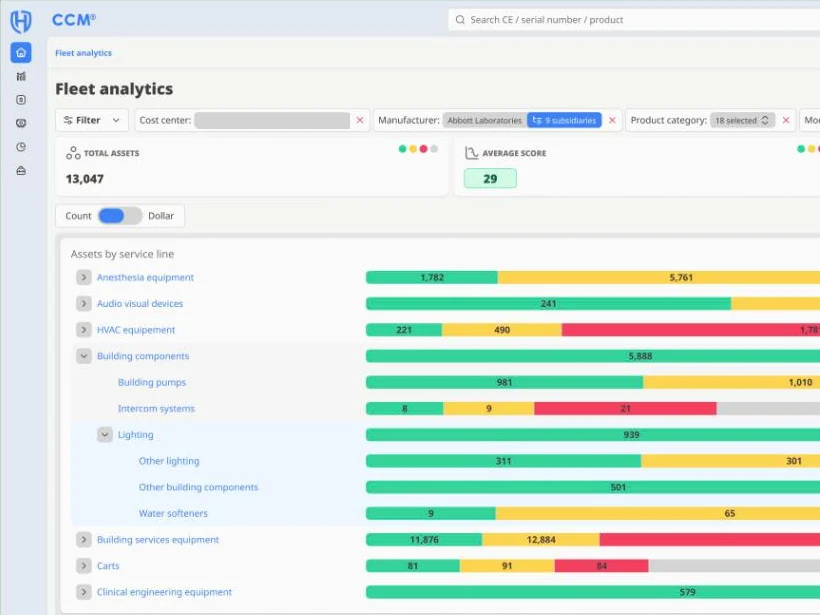

Capital Cycle Management system for hospital equipment fleets
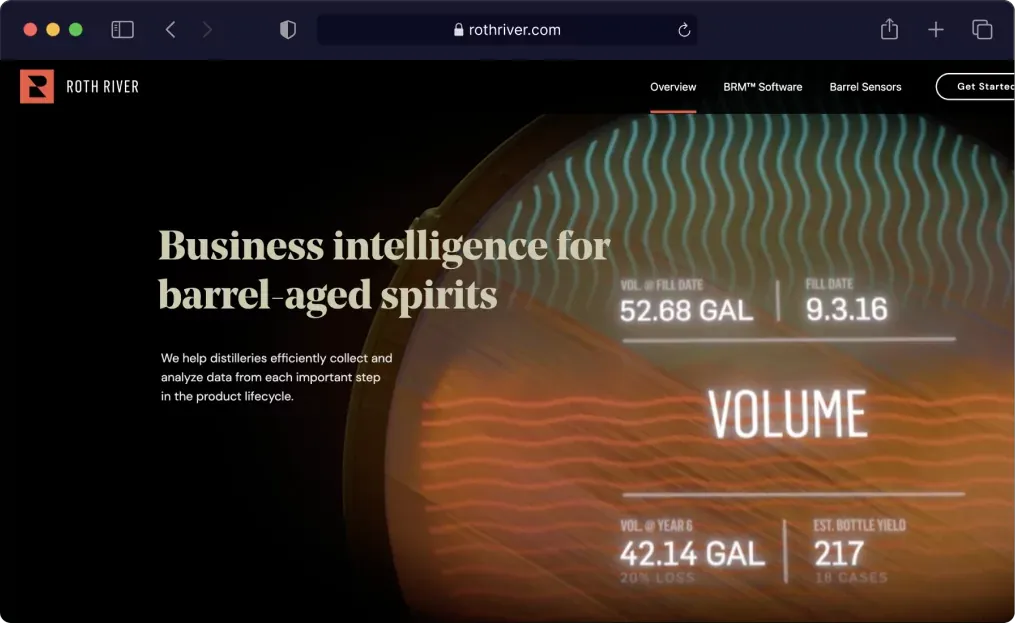

IoT monitoring with web and mobile apps for a distillery
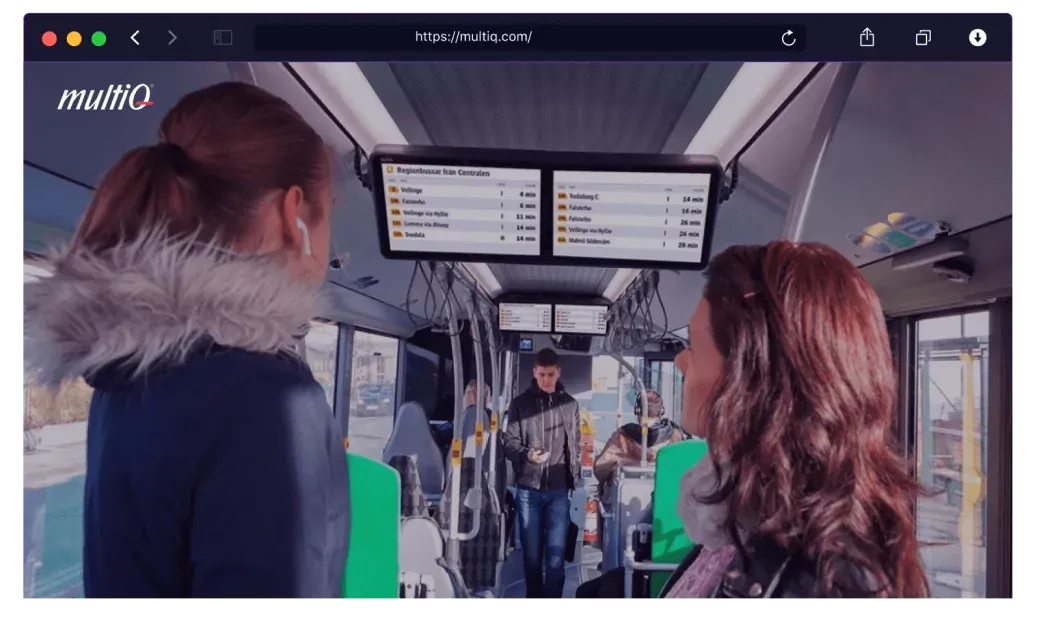

AngularJS to Angular migration for an enterprise signage platform
Client Testimonials
"We maintain our partnership and team dynamics with no plans to end any time soon."
 Founder & CPO, Roth River
"This honest and collaborative approach made working with them a true partnership."
"The level of service and support is outstanding."
 CTO, Manufacturer & Distribution Software Provider
Frequently Asked Questions
Not here? Write the question in the form. We answer in one working day.
01What is asset lifecycle management software?
It is software that tracks each physical asset from planning and purchase through commissioning, operation, maintenance and disposal. It keeps capital planning, maintenance and finance data in one record, so you see what an asset costs over its life and when to replace it.
02What is the difference between asset lifecycle management and enterprise asset management?
Enterprise asset management (EAM) runs and maintains assets while they are in service. Asset lifecycle management covers the whole span: capital planning before purchase, project delivery and handover, then replacement or disposal. Many lifecycle platforms connect to an EAM instead of replacing it.
03How can custom software support capital planning and asset management?
Custom software ties capital requests to the condition, remaining life and cost of the assets you own. It ranks requests against the budget, shows what deferring a replacement costs, and gives finance and operations the same numbers.
04Can asset lifecycle management software integrate with ERP, EAM, and CMMS systems?
Yes. We build connectors to ERP systems for finance and procurement, to EAM and CMMS tools for work orders, and to BIM and IoT sources where you need them. Each connector has defined sync rules, error handling and a reconciliation report.
05How long does it take to develop custom asset lifecycle management software?
A first version on real data typically takes about 12 weeks after a 2-week discovery, depending on scope and integrations. Larger platforms then grow release by release.
06Can asset lifecycle management software be developed in phases?
Yes, and we recommend it. Start with the asset registry and the stage that costs you most today, such as maintenance or capital planning, then add modules while the system is already in use.
Guides and services that sit next to asset lifecycle management software development services: inventory, ERP, IoT and legacy migration.
Discuss your project.
We will quote the right way to work
- 30 minute scoping call
- ROI discovery completed in two weeks
- Written scope, price and timeline